Top 120 SEO Statistics You Need For 2026

Get Your Free Website Audit
($3,000 Value)
- Uncover performance issues
- Identify SEO opportunities
- Security gaps, and quick wins
Table of Contents
- TL;DR: 8 Stats That Define SEO in 2026
- Google Search Engine Statistics
- AI Overviews & Zero-Click Search Statistics
- GEO & AEO Statistics
- AI Search Engine Statistics
- AI Content & SEO Performance
- Backlinks Stats
- Ranking SEO Statistics
- Technical SEO Statistics
- Local SEO Statistics
- Voice Search and Structured Data Statistics
- Video SEO Statistics
- YouTube SEO Statistics
- Marketing SEO Statistics
- Mobile SEO Statistics
- On-Page/Content SEO Statistics
- Keyword Statistics
- E-commerce SEO Statistics
- SEO Industry Statistics
- How Can WP Creative Improve Your SEO?
- Key Takeaways
Curious about the SEO statistics shaping 2026?
Search engine optimisation continues to evolve rapidly. Google now displays AI Overviews in over a quarter of US searches. ChatGPT sends more referral traffic than Reddit. Zero-click searches dominate mobile. The SEO landscape in 2026 looks fundamentally different from even 12 months ago.
These 120 statistics cover everything from Google’s market share and AI search growth to local SEO, technical performance, and e-commerce conversion data. Whether you are planning your digital marketing strategy for the year ahead or benchmarking your current performance, this is the data to guide your decisions.
TL;DR: 8 Stats That Define SEO in 2026
If you only have 60 seconds, here is what matters most right now:
- Google holds 89.85% market share but is declining. Bing, ChatGPT and Perplexity are gaining ground. (StatCounter)
- AI Overviews appear in 25.8% of US searches, pushing zero-click rates to 83% on affected queries. (Search Engine Land)
- 58.5% of all Google searches end without a click. On mobile, that number hits 77%. (Semrush)
- Only 34% of companies have trained teams in GEO, yet early adopters report 22% higher ROI and 4.4x more qualified traffic. (Incremys)
- ChatGPT now sends more referral traffic than Reddit and LinkedIn, with AI platforms generating 1.1 billion+ referral visits in June 2025 alone. (TechCrunch)
- 86.5% of top-ranking pages use AI assistance, but the correlation between AI usage and ranking is essentially zero. Quality, not origin, determines rank. (Ahrefs)
- Organic search drives 53% of all website traffic. SEO leads close at 14.6% versus 1.7% for outbound. (BrightEdge)
- Mobile accounts for 64% of global traffic. A one-second speed improvement can lift mobile conversions by 27%. (Statista)
Now let’s break it all down.
Google Search Engine Statistics
Google dominates global search, but its market share is shrinking. Bing is gaining ground through Microsoft Copilot integration, while ChatGPT and Perplexity are carving out entirely new search categories. Here is where the numbers stand.
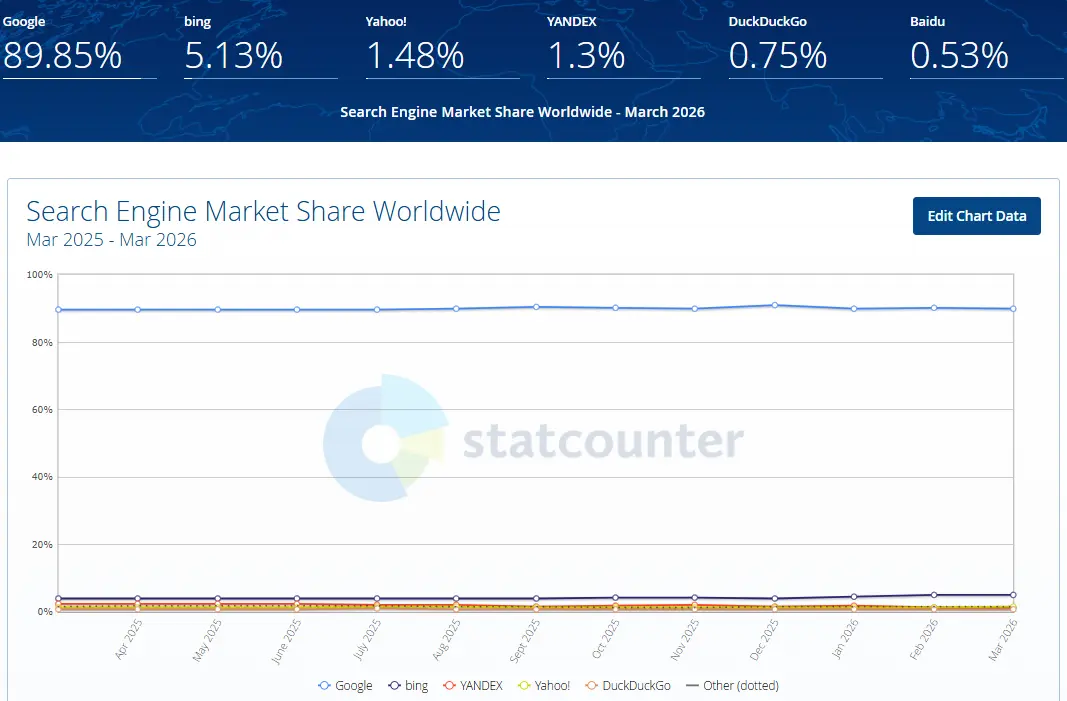
- As of March 2026, Google holds 89.85% of the global search engine market share, continuing its decline from 91.47% in December 2024, followed by Bing (5.13%), Yahoo (1.48%), Yandex (1.3%), DuckDuckGo (0.75%) and Baidu (0.53%). (StatCounter)

- Organic search generates 53% of all trackable website traffic, with paid search adding another 15%. Combined, search engines deliver 68% of total website visits. (BrightEdge)
- 96.55% of all web pages get no organic search traffic from Google. (Ahrefs)
- Google uses hundreds of ranking signals to determine search results. The exact number and weight of each factor are not publicly disclosed and vary by query type. (Ahrefs)
- 70-80% of search users skip paid ads entirely and click organic results. Only 2% of searchers click the top paid ad, while 40% click the first organic link. (Gitnux)
- The #1 result in Google’s organic search results has an average click-through rate (CTR) of 27.6%. However, this metric is declining on informational queries due to AI Overviews. The top 3 results collectively receive 68.7% of all clicks. (Backlinko)
- The average SEO close rate across industries is around 14.6%, significantly outperforming outbound leads at 1.7%. (HubSpot)
- Only 1.74% of newly published pages will rank in the top 10 search results within a year of publication (down from 5.7% in 2017). However, 40.82% of pages that do break through tend to do so within their first month. (Ahrefs)
- The average page in the top 10 search results is 2+ years old. More specifically, 72.9% of top-10 pages are 3+ years old, and the average #1-ranking page is 5 years old, reflecting Google’s increasing preference for aged, authoritative content. (Ahrefs)
AI Overviews & Zero-Click Search Statistics
Google launched AI Overviews in May 2024. Within 18 months, they appear in over a quarter of US searches. AI Overviews reduce organic click-through rates by up to 61% on affected queries. Zero-click searches now exceed 58% across all Google queries, and on mobile, that figure reaches 77%.
For SEOs, optimising for AI citation visibility is now as important as ranking in traditional blue links.
- AI Overviews appear in approximately 25.8% of US searches as of January 2026, with BrightEdge data showing up to 48% of searches triggering some form of AI-generated summary. (Search Engine Land)
- Organic CTR dropped 61% (from 1.76% to 0.61%) for queries where AI Overviews are displayed, based on an analysis of 68,000 real queries. (Seer Interactive)
- Searches triggering AI Overviews show an 83% zero-click rate, compared to 60% for traditional searches without AI summaries. In Google AI Mode, 93% of searches end without clicks. (Click-Vision)
- AI Overviews appear in 39.4% of informational queries but only 4% of e-commerce queries, meaning transactional and commercial keywords still drive strong organic click-through. (Position.Digital)
- Brands cited in AI Overviews earn 35% more organic clicks and 91% more paid clicks than competitors who are not cited. A single AI citation can generate more qualified traffic than ranking #3 for the same query. (DataSlayer)
- 58.5% of US searches and 59.7% of EU searches now end without a click. On mobile, zero-click rates reach 77%. This has increased 13 percentage points since AI Overviews launched in May 2024. (Semrush)
GEO & AEO Statistics
Generative Engine Optimisation (GEO) focuses on getting your content cited in AI-generated search answers. Answer Engine Optimisation (AEO) targets featured snippets, People Also Ask boxes, and voice search results.
Both disciplines represent the next evolution of SEO. ChatGPT, Perplexity, and Google AI Mode are creating entirely new channels for content discovery. The opportunity is significant. The adoption gap is even bigger.
- The global GEO services market is projected to grow from $886 million in 2024 to $17.02 billion by 2031, at a CAGR of 34%. McKinsey predicts 75% of searches could be generative by 2028. (Incremys)
- Only 34% of companies have trained their teams in GEO, despite 86% of enterprise SEO teams having integrated AI into their workflows. This skills gap represents a significant competitive advantage for early movers. (Incremys)
- Businesses adopting GEO report 22% higher ROI, 40% increased visibility, and 4.4x more qualified traffic than those relying solely on traditional SEO. (Incremys)
- Featured snippet SERP visibility declined 64% between January and June 2025, dropping from 15.41% to 5.53% of all US desktop searches. AI Overviews and featured snippets rarely appear together. (SHNO)
- Pages with proper schema markup have a 2.5x higher chance of appearing in AI-generated answers. However, only 12.4% of registered domains have implemented Schema.org structured data, representing a massive untapped opportunity. (StackMatix)
- People Also Ask (PAA) boxes appear in 19.4% of Google searches, with 34.7% growth year-over-year (Feb 2024 to Jan 2025). 63% of PAA interactions happen on mobile. (SHNO)
- Gartner predicts a 25% decline in traditional search volume by 2026, rising to 75% by 2028. Currently, 60% of information retrieval already comes from generative AI sources. (Marketing LTB)
AI Search Engine Statistics
ChatGPT, Perplexity, Gemini, and Copilot are reshaping how users discover information. ChatGPT holds 68% of the AI chatbot market. Perplexity processes 780 million queries per month. AI platforms collectively sent 1.1 billion referral visits to websites in June 2025 alone.
These platforms are no longer experimental. They are traffic sources.
- ChatGPT holds 68% of the AI chatbot market share as of January 2026, down from 87.2% one year ago. Google Gemini surged to 18%, while Microsoft Copilot holds 7.22%. (Vertu/Similarweb)
- ChatGPT reached 900 million weekly active users in Q1 2026 and now sends more referral traffic to websites than Reddit and LinkedIn. (Exposure Ninja)
- Perplexity processed 780 million queries in May 2025, up 239% from 230 million in August 2024, positioning itself as the leading AI-first search engine. (Incremys)
- AI platforms generated 1.1+ billion referral visits to websites in June 2025, up 357% year-over-year. ChatGPT drives 87.4% of all AI referral traffic. (TechCrunch)
- Gemini referral traffic grew 388% between September and November 2025, outpacing ChatGPT’s growth rate and signalling Google’s AI is becoming a significant traffic source in its own right. (Digiday)
- AI-referred sessions jumped 527% year-over-year in the first half of 2025. However, AI referral traffic still represents only 0.1-0.5% of total web traffic, meaning the opportunity is massive but early. (Position.Digital)
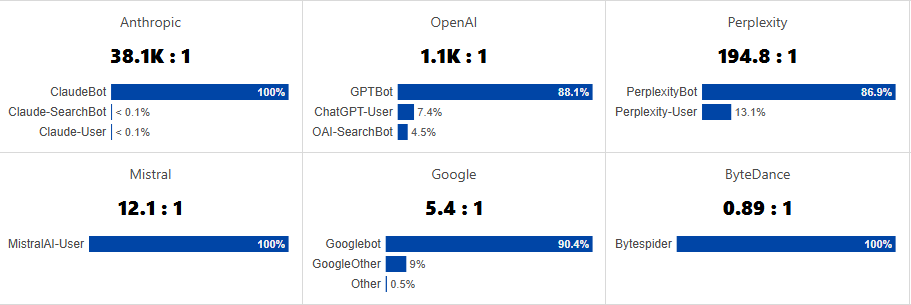
- AI bots scrape far more than they send back: Anthropic’s ClaudeBot recorded a crawl-to-referral ratio of 38,065:1 in July 2025 (down from 286,930:1 in January 2025), OpenAI’s GPTBot sits at 1,091:1, and Perplexity at 195:1. This imbalance remains a structural challenge for publishers. (Cloudflare)

AI Content & SEO Performance
Google does not penalise AI-generated content. Google penalises low-quality content, regardless of how it was produced. Ahrefs found that 86.5% of top-ranking pages use AI assistance, with zero correlation between AI usage and ranking position.
The data separates what works from what does not.
- 86.5% of top-ranking pages use at least some AI assistance, according to an Ahrefs study of 600,000 pages. The correlation between AI usage and ranking position is 0.011, essentially zero. (Ahrefs)
- 94% of marketers plan to use AI for content creation in 2026. Non-AI blog creation dropped from 65% to just 5% in two years. Teams using AI save 5+ hours per week and publish 47% more content monthly. (DemandSage)
- Of articles cited by ChatGPT and Perplexity, 82% were human-written and 18% were AI-generated. Consumer preference for AI content has dropped to 26%, down from 60% three years ago. (Position.digital)
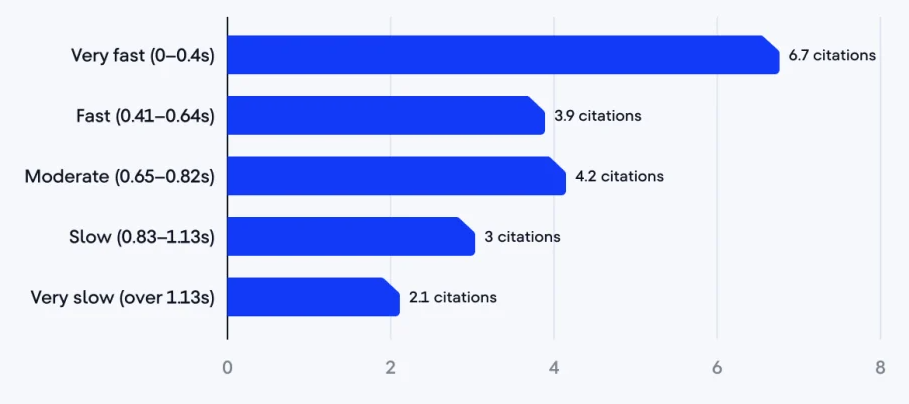
- Pages with First Contentful Paint (FCP) under 0.4 seconds average 6.7 ChatGPT citations, while pages over 1.13 seconds average only 2.1 citations. Fast pages are 3x more likely to be cited by AI. (SE Ranking)

- Google’s December 2025 core update hit AI content sites without human editing hardest: 85-95% traffic losses for completely unedited AI content, 60-80% drops for lightly edited. Sites with deep content authority gained an average 23% in organic visibility. (ALM Corp)
Backlinks Stats
Backlinks remain one of Google’s strongest ranking signals. The top result in Google has 3.8x more backlinks than positions 2-10. Yet 95% of all pages on the internet have zero backlinks, making link acquisition a significant competitive moat.
- Pages with numerous backlinks tend to rank higher on Google. Specifically, the top result in Google has an average of 3.8 times more backlinks than positions 2 to 10. (Backlinko)
- The cost of acquiring a paid backlink varies significantly by type: guest posts average $83-100, while niche edits average $370. Overall average acquisition cost is approximately $370 per link. (Prestige Links)
- 95% of all pages on the internet have zero backlinks, making quality backlinks a significant competitive advantage. Only 2.2% of pages successfully acquire external links. (Backlinko)
- 19% of domains have reciprocal links with sites they link to, while 44% of top-ranking pages contain at least some reciprocal links. Reciprocal linking is a natural outcome of content relevance but must be approached carefully at scale. (Ahrefs)
- 66.5% of links to sites in the last nine years are dead. An additional 6.45% have temporary errors, bringing total lost links to 74.5%. (Ahrefs)
- On average, long-form content gets 77.2% more backlinks than shorter articles. (Backlinko)
- Businesses that maintain a blog receive significantly more backlinks to their website, with companies publishing blogs generating 67% more monthly leads than those without. (HubSpot)
Related: Top Link Building Methods For Your WordPress Website
Ranking SEO Statistics
Google rankings determine visibility, clicks, and revenue. The #1 organic result captures 27.6% CTR, while page two gets less than 1% of clicks. Position changes compound: moving from #2 to #1 increases clicks by 74.5%.
- A significant 75% of users never scroll past the first page of search results. Only 0.78% of users click results on Google’s second page. (AIOSEO)
- The #1 organic search result receives 27.6% CTR, while position #10 receives 2.2%, representing approximately a 12.5x difference in click likelihood. (Backlinko)
- Only 13.7% of pages ranking in the top 10 were created within the same year, down from 22% in 2017. Pages older than 3 years now dominate at 72.9% of top 10 results. (Ahrefs)
- Newly published pages from high-authority sites (DR 80+) typically rank new content faster than low-authority sites due to established link equity, though DR alone does not determine ranking position. Content quality, relevance, and technical SEO remain critical. (Ahrefs)
- Improving your search engine ranking by just one position can increase your CTR by an average of 2.8%. However, the gain varies dramatically: moving from position 4 to 3 increases clicks by 44%, while position 10 to 9 increases by 11%. (Backlinko)
- Moving from position 10 to position 9 increases CTR by approximately 11%, while moving from position 2 to position 1 increases CTR by 74.5%. The leverage sits at the top: position gains compound dramatically at positions 1-3. (Backlinko)
- Approximately 21% of searchers click on multiple search results, meaning 79% of searchers are satisfied with a single result or stop searching entirely. (Moz)
Technical SEO Statistics
Technical SEO provides the foundation for rankings. HTTPS encrypts 95%+ of web traffic. Page speed directly impacts conversions: each second of delay costs approximately 7%. Websites with active blogs have 434% more indexed pages.
- HTTPS is table stakes for modern SEO. While not a major ranking lever, it’s required for full Page Experience credit. Sites without HTTPS see “Not Secure” warnings that spike bounce rates and kill conversions. (Google)
- Websites featuring active blogs have 434% more indexed pages and 97% more inbound links than those without, significantly enhancing SEO performance. Companies with blogs generate 67% more monthly leads. (HubSpot)
- As of 2025, approximately 95%+ of web traffic is encrypted (HTTPS). Unencrypted HTTP traffic is now the exception rather than the rule. (Google)
- Domain Authority (DA) is a Moz metric that predicts ranking potential, not a Google ranking factor. Google doesn’t use DA. However, DA correlates strongly with rankings because it measures link profile quality. Sites with DA 50+ typically rank for moderately competitive keywords; DA 70+ for extremely competitive terms. (Moz)
- 70% of consumers say page speed impacts their willingness to buy from an online retailer. Each second of load time costs approximately 7% in conversions. (Unbounce)
Read More: Technical SEO Guide [2026]

Slow website wasting your marketing spend?
- Uncover performance issues
- Identify SEO opportunities
- Security gaps, and quick wins
Local SEO Statistics
Local SEO connects businesses to nearby customers at the moment of intent. 88% of local searches result in a call or visit within 24 hours. Google Business Profile optimisation increases store visits by 27%. For businesses with physical locations, local search is the highest-converting digital channel.
- Businesses with optimised Google Business Profiles see a 27% increase in physical store visits within 48 hours, plus 45% more direction requests when photos are included. 58% of customers say a complete GBP increases physical visits. (SQ Magazine)
- 88% of local searches result in a call or visit to that business location within 24 hours. (HubSpot)
- 72% of consumers who perform local search queries will visit a store within 5 miles of their current location. (HubSpot)
- 76% of local smartphone searches result in a store visit within 24 hours, and 28% of those local searches lead to a purchase. Local search intent converts at nearly 4x the rate of non-local queries. (ThinkWithGoogle)
- 78% of local mobile searches lead to an offline purchase: 73% in-store, 16% by phone, 11% online. This makes local mobile search the highest-converting digital channel for businesses with physical locations. (HubSpot)
- 50% of consumers who searched with a local intent on their smartphone visited a physical store within 24 hours. 34% of those who performed the same search on a computer or tablet also visited within a day. (ThinkWithGoogle)
Looking to connect with your local audience? Our Melbourne local SEO services can help your website get potential customers looking for your services in your locality. Let’s have a chat about boosting your local leads!
Voice Search and Structured Data Statistics
Voice search accounts for 20% of Google App queries. Structured data markup increases click-through rates by 5-35% depending on schema type. Together, voice and structured data shape how search engines understand and surface content.
- 20% of searches in the Google App are done by voice. (ThinkWithGoogle)
- Websites using structured data see 5-35% CTR increases, depending on schema type. Review stars average 35% uplift; product schema approximately 25%; rich results generally 20-30%. (Schema App)
- 58% of consumers have used voice search to find local businesses. 27% visit a local business website after making a voice search. (BrightLocal)
- 27% of the global online population uses voice search on mobile devices, compared to 13% on desktop and 5% on tablet. Voice search adoption continues to grow as natural language processing improves across devices. (DemandSage)
- 91% of consumers are more likely to use a business with positive online reviews. 88% would use a business that replies to all reviews. (BrightLocal)
- 40.7% of voice search answers come from featured snippets. Featured snippets, when present, capture 42.9% of total clicks and have a CTR of 8.2% in 2026. (SHNO)
Video SEO Statistics
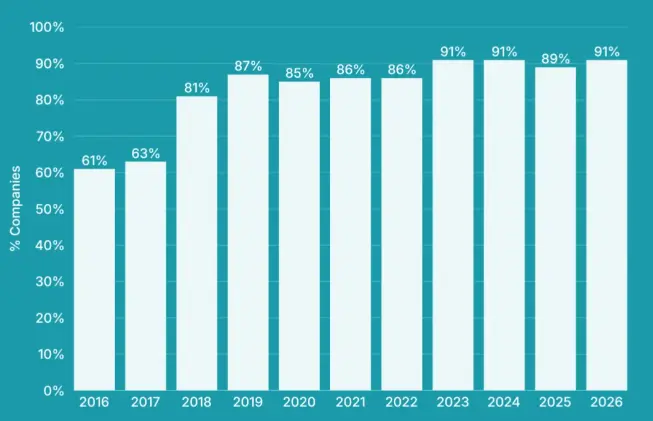
Video content drives 82.5% of all internet traffic in 2025. YouTube reaches 2.85 billion monthly active users. 91% of businesses now use video as a marketing tool. For SEO, video improves engagement, dwell time, and blended SERP visibility.
- On keywords where Google displays video results, videos are significantly more likely to rank on page 1 than text-only pages. However, this advantage applies only to keyword searches that trigger blended results. Modern ranking factors include watch time, engagement velocity, and audience retention. (Forrester)
- Video content accounts for 82.5% of all internet traffic in 2025, with short-form video projected to reach 90%. Live video accounts for approximately 25% of total internet traffic. (Storybox)
- 91% of businesses use video in their marketing strategy in 2026. 93% of marketers consider video integral to their strategy. 67% of non-video marketers plan to start video in 2026. (Wyzowl)
YouTube SEO Statistics
- YouTube has 2.85 billion monthly active users globally in 2026, making it the world’s second-largest platform by users, with approximately 122 million daily active users. (GlobalMediaInsights)
- Videos ranking on the first page of YouTube average 14 minutes and 50 seconds in length. However, 5-10 minute videos achieve the best viewer retention (31.5%), while videos over 12 minutes unlock mid-roll ads and greater total watch time. (Storybox)
- Users watch over 1 billion hours of YouTube content daily, translating to approximately 5 billion individual video views per day and an average of 48.7 minutes of viewing per user. (Affmaven)
- In the US, 28.5% of Google searches result in clicks to Google-owned platforms including YouTube, Maps, and Images, highlighting the integration between Google and YouTube in content discovery. (AllOutSEO)
Marketing SEO Statistics
SEO delivers higher ROI than PPC across most industries. 70% of marketers confirm SEO outperforms paid search. B2B companies report SEO leads close at 14.6%, compared to 1.7% for outbound. Content quality remains the single most important ranking factor.
- 70% of marketers say SEO is more effective than PPC, with SEO delivering an average 8x ROI versus 4x for PPC. (Databox)
- 57% of B2B marketers stated that SEO generates more leads than any other marketing initiative, and 81.2% rate SEO as superior to PPC for lead quality. (WorldMetrics)
- 49% of B2B companies use SEO as part of their marketing strategy, though only 30% rank it as a top-two investment priority. (Semrush)
- 68% of B2B marketers report that inbound marketing generates more qualified leads than outbound marketing, with SEO leads closing at 14.6% versus 1.7% for outbound. (Ahrefs)
- 50% of marketers rate content creation as extremely important for SEO success, with 77% of top B2B performers prioritising high-quality content as their primary tactic. (SearchAtlas)
- Excessive DOM complexity directly harms conversion rates. Google Lighthouse flags pages exceeding 800 DOM nodes. Reducing DOM size below 1,000 elements improves Largest Contentful Paint (LCP) and conversion rates. (Google Lighthouse)
- Websites that load in 1 second achieve 3x higher conversion rates than those loading in 5 seconds (9.6% vs 3.3% for B2B; 2.5x for e-commerce). (Portent)
Mobile SEO Statistics
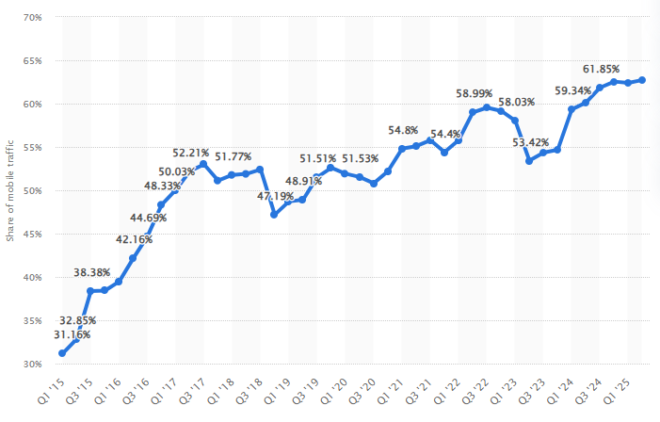
Mobile devices generate 64% of global website traffic. Mobile page speed directly affects both rankings and revenue: a one-second improvement lifts conversions by up to 27%. With 53% of users abandoning pages that take over 3 seconds to load, mobile performance is a revenue lever, not a technical nice-to-have.
- Mobile devices account for approximately 61.85% of global website traffic as of mid-2025, up from 59% in late 2024. Regional variance is significant: Africa 79%, Asia 72%, North America 57%, Europe 51%. (Statista)

- As page load time goes from one second to 10 seconds, the probability of a mobile site visitor bouncing increases by 123%. (ThinkWithGoogle)
- A one-second website speed improvement can increase conversions for mobile users by up to 27%. (Google)
- 53% of mobile site visitors abandon pages that take longer than 3 seconds to load, with most users expecting load times of 2-3 seconds. (Google)
- Mobile searches containing “near me” have grown 250% since 2023, with 73% of these high-intent queries leading to a store visit within 24 hours. (ThinkWithGoogle)
- Over 51% of smartphone users have discovered a new company or product when conducting a search on their smartphone. (ThinkWithGoogle)
- Searches for “best” have increased by 80% over the past two years among mobile users. (Think With Google)
- 70% of in-store shoppers use their phones to research products before buying, with 36% purchasing online while physically standing in the store. Mobile devices now influence the majority of in-store purchase decisions. (Bazaarvoice)
- 76% of people who search locally on mobile visit a physical place within 24 hours. 88% of mobile local searches result in a call or visit within 24 hours. (Backlinko)
- 71% of in-store shoppers who use smartphones for research say their device has become more important to their in-store experience. (Invesp)
- 60% of smartphone users have contacted a business directly using the search results, such as the “click to call” option. (Think With Google)
- The average time to fully load a mobile landing page dropped by seven seconds to approximately 15 seconds (Google 2025, 11 million pages analysed across 213 countries). This is still 5x above the 3-second abandonment threshold, representing a significant conversion opportunity. (Google)
On-Page/Content SEO Statistics
On-page SEO determines how search engines understand your content. Google rewrites 76% of title tags. Only 74.98% of top-ranking pages include meta descriptions. Updating old blog posts with fresh content increases organic traffic by up to 106%. These are low-effort, high-impact optimisations.
- Updating and republishing old blog posts with new content and images can increase organic traffic by as much as 106%. Focus on posts currently ranking positions 4-10 for fastest results. (HubSpot)
- The average top-ranking page contains 1,447-1,800 words, but word count is not a ranking factor. Topical coverage (depth of intent match) matters more. A shorter page answering user intent completely outranks longer, unfocused content. (Backlinko)
- Only 74.98% of top-ranking pages include meta descriptions, representing a quick CTR advantage if competitors lack them. Pages with optimised meta titles show 8.9% higher CTR. (Ahrefs)
- Content with at least one image gets 94% more views than content without images. Adding video increases views by 48%. (Jeff Bullas)
- 70% of marketers say SEO delivers better ROI than PPC. 81% of B2B companies commit $7,500+ monthly to SEO, indicating strong confidence in its effectiveness. (Databox)
- Both on-page and off-page SEO matter, but the balance depends on site maturity. New sites need strong on-page foundations (content quality, topical coverage, UX) before scaling off-page authority. E-E-A-T and AI Overviews have elevated on-page importance significantly. (HubSpot)
- 7.4% of top-ranking pages rank without a title tag. While exceptional authority can compensate, 92.6% of top-ranking pages have them, making title tag optimisation a core CTR-improvement tactic. (Backlinko)
- Google now rewrites 76% of title tags (up from 33% in 2021), retaining only 35% of original content. Strategy: write 51-60 character titles aligned with current search intent and H1 tags; avoid keyword stuffing. (Search Engine Land)
- Pages with URLs containing relevant keywords have a 45% higher CTR, indicating the importance of URL optimisation. Note: overall position #1 CTR has declined 32% due to AI Overviews, making clean URL structure even more critical. (SEJ)
- Title tags between 40-60 characters show 8.9% higher CTR than those outside this range. Short titles (15-40 chars) leave the message incomplete; longer titles (65+ chars) truncate on mobile. (Backlinko)
Also Read: A Comprehensive Guide to On-Page SEO
Keyword Statistics
Long-tail keywords account for 70% of all Google searches. Zero-click searches now consume 58-65% of all queries. 15% of daily Google searches have never been searched before. Understanding keyword intent, not just keyword volume, is what separates effective SEO from wasted effort.
- Long-tail keywords make up 70% of all Google searches, though short-tail, high-competition terms still drive the majority of total search volume. (HubSpot)
- URLs containing keywords achieve a 45% higher click-through rate on SERPs compared to URLs without keywords. Keywords in URLs are a minor ranking factor but primarily improve SERP click-through performance. (Backlinko)
- The average search query length is 3.4 words (US), though SEO keyword databases average 1.9 words per keyword. This gap reflects the dominance of short-tail terms in keyword tools versus the natural language preferences of searchers. (Keywords Everywhere)
- Zero-click searches have accelerated dramatically. In 2025, 58-65% of all Google queries end without a click, with AI Overviews driving an 83% zero-click rate on affected searches. This is a 2-3x increase from 2024 levels. (SparkToro)
- Keywords between 10-15 words in length get 1.76x more clicks than single-word terms, reflecting clearer search intent and lower competition. (Backlinko)
- 15% of all Google searches have never been searched before. This metric has remained stable at 15% since 2013, representing approximately 1.3 billion new queries daily across 8.5 billion total searches. (Google)
- Approximately 35% of Google searches contain four or more words, with short-tail queries (1-2 words) declining from 42% to 31% between January and June 2025, indicating a shift toward more specific search intent. (AllOutSEO)
- The average cost-per-click in Google Ads across all industries reached $5.26 in 2025, continuing a five-year upward trend. CPCs vary significantly by industry, from $1.60 (Arts & Entertainment) to $8.58 (Legal Services). (WordStream)
Wondering where to start with keyword research? Here is our guide on Keyword Research for your website.
E-commerce SEO Statistics
Organic search drives 53% of all e-commerce website traffic. Mobile accounts for 76-78% of e-commerce visits but carries a 75.5% cart abandonment rate. A one-second page delay costs approximately $7,000 per month for a store earning $100,000. Speed, mobile UX, and local SEO are the highest-leverage growth channels for online retailers.
- Organic search remains a dominant channel for retail e-commerce, driving approximately 53% of all website traffic, with Google search specifically accounting for 43% of direct e-commerce traffic. (Ahrefs)
- Mobile devices account for 76-78% of e-commerce traffic and 68% of online orders. However, mobile cart abandonment at 75.5% signals a significant conversion optimisation opportunity. (Capital One Shopping)
- A one-second delay in page load time can reduce conversions by 7%. For an e-commerce store earning $100,000 per month, this delay costs approximately $7,000 monthly in lost conversions. (Portent)
- E-commerce sites publishing blogs regularly generate 55% more traffic than non-blogging competitors, with conversion rates 5.8x higher (2.9% vs. 0.5%). User-generated content delivers 144% more conversions and 162% higher revenue per visitor when shoppers engage with UGC reviews. (Bazaarvoice)
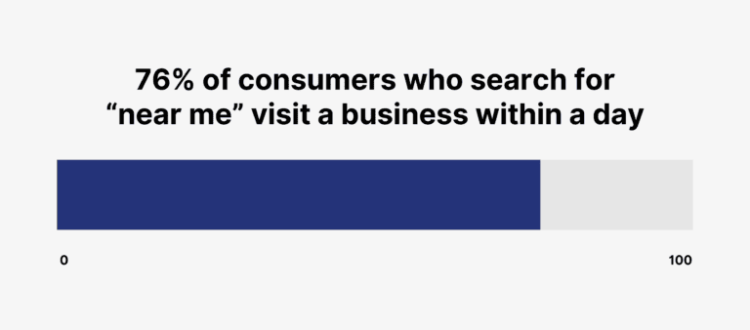
- 76% of consumers who search “near me” visit a business within 24 hours, with 80% of local mobile searches resulting in a conversion (purchase, booking, or visit). For e-commerce with physical locations, “near me” searches represent high-intent, high-converting traffic. (Backlinko)
SEO Industry Statistics
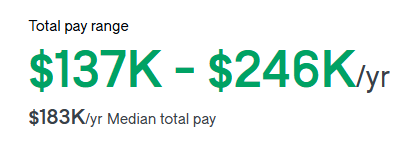
The global SEO industry is valued at $81.5 billion and is projected to reach $171.8 billion by 2030. Demand for marketing professionals specialising in SEO is growing 10% through 2026. Salaries for Head of SEO roles in the US average $182,143, reflecting the strategic value businesses now place on organic search.
- The global SEO services market, valued at approximately $81.5 billion in 2024, is projected to reach $171.8 billion by 2030, growing at a compound annual growth rate (CAGR) of 13.24%. (MarkNtel Advisors)
- In the United States, individuals in Head of SEO positions earn an average salary of $183,000 (2026), with experienced professionals (10+ years) commanding $200,000-$245,000+ depending on company size and location. (Glassdoor)

- Investing in SEO correlates with an average revenue increase of 2.8% across all businesses. However, sector-specific ROI varies dramatically: e-commerce averages 200-275%, while high-value services (medical, legal) see 1,000%+ ROI. The median ROI across well-executed campaigns reaches 748%. (Writtent)
- SEO delivers strong ROI for e-commerce businesses: 200-275% in year one, translating to $2.75 profit per dollar invested. Extended tracking shows ROI compounds significantly, reaching 2.6x-4.6x the initial investment after 12-24 months as organic rankings strengthen. (First Page Sage)
- Approximately 48-71% of businesses invest between $500 to $7,500 per month on SEO services, depending on business size and vertical. For e-commerce specifically, 71% spend in this range. The average agency engagement runs $3,209 per month. (WebFX)
- The demand for marketing professionals, including those specialising in SEO, is projected to grow by 10% through 2026 (US BLS). Growth is concentrated in roles emphasising AI fluency, data analytics, and technical execution: 78% of marketing leaders offer premium compensation for hybrid skill sets. (BLS)
How Can WP Creative Improve Your SEO?
WP Creative is a leading WordPress web development agency in Australia. WP Creative specialises in SEO for WordPress websites, covering keyword research, on-page optimisation, technical SEO audits, and content strategy.
Our team improves loading speeds, mobile responsiveness, and schema implementation to align with search engine requirements. With the rise of AI Overviews and generative search, WP Creative also helps businesses optimise for GEO and AEO. This ensures visibility across both traditional Google results and AI-powered search engines like ChatGPT and Perplexity.
The goal is simple: boost your rankings, drive organic traffic, and deliver measurable revenue growth.
Ready to take your website to the next level? Contact us today and let WP Creative help you achieve your SEO goals.
Key Takeaways
- AI Overviews are reshaping Google search. AI Overviews appear in 25.8% of US searches and drive 83% zero-click rates. Brands cited in AI Overviews earn 35% more organic clicks. Optimising for AI citation is now a core SEO discipline.
- GEO adoption creates a competitive gap. Only 34% of companies have trained teams in Generative Engine Optimisation. Early adopters report 22% higher ROI and 4.4x more qualified traffic. The skills gap is a window of opportunity.
- Organic search delivers the highest ROI. Organic search drives 53% of all website traffic. SEO leads close at 14.6% versus 1.7% for outbound. 70-80% of users skip paid ads entirely.
- Mobile performance is a revenue lever. Mobile devices generate 64% of global traffic. A one-second speed improvement lifts mobile conversions by 27%. 53% of users abandon pages loading over 3 seconds.
- Content quality outweighs content volume. Google’s December 2025 core update rewarded sites with deep content authority (+23% visibility) and penalised unedited AI content (-85-95% traffic). E-E-A-T signals matter more than ever.
- AI search engines are becoming real traffic sources. ChatGPT sends more referral traffic than Reddit and LinkedIn. AI platforms generated 1.1 billion+ referral visits in June 2025. This channel is early and growing fast.
The SEO landscape has shifted from pure keyword rankings to multi-platform visibility across Google, AI search engines, and generative answer platforms. The businesses that adapt first will capture disproportionate value.Want to stay ahead in SEO? Check out our latest blog post on the future of SEO.

Get Your Free Website Audit
($3,000 Value)
- Uncover performance issues
- Identify SEO opportunities
- Security gaps, and quick wins